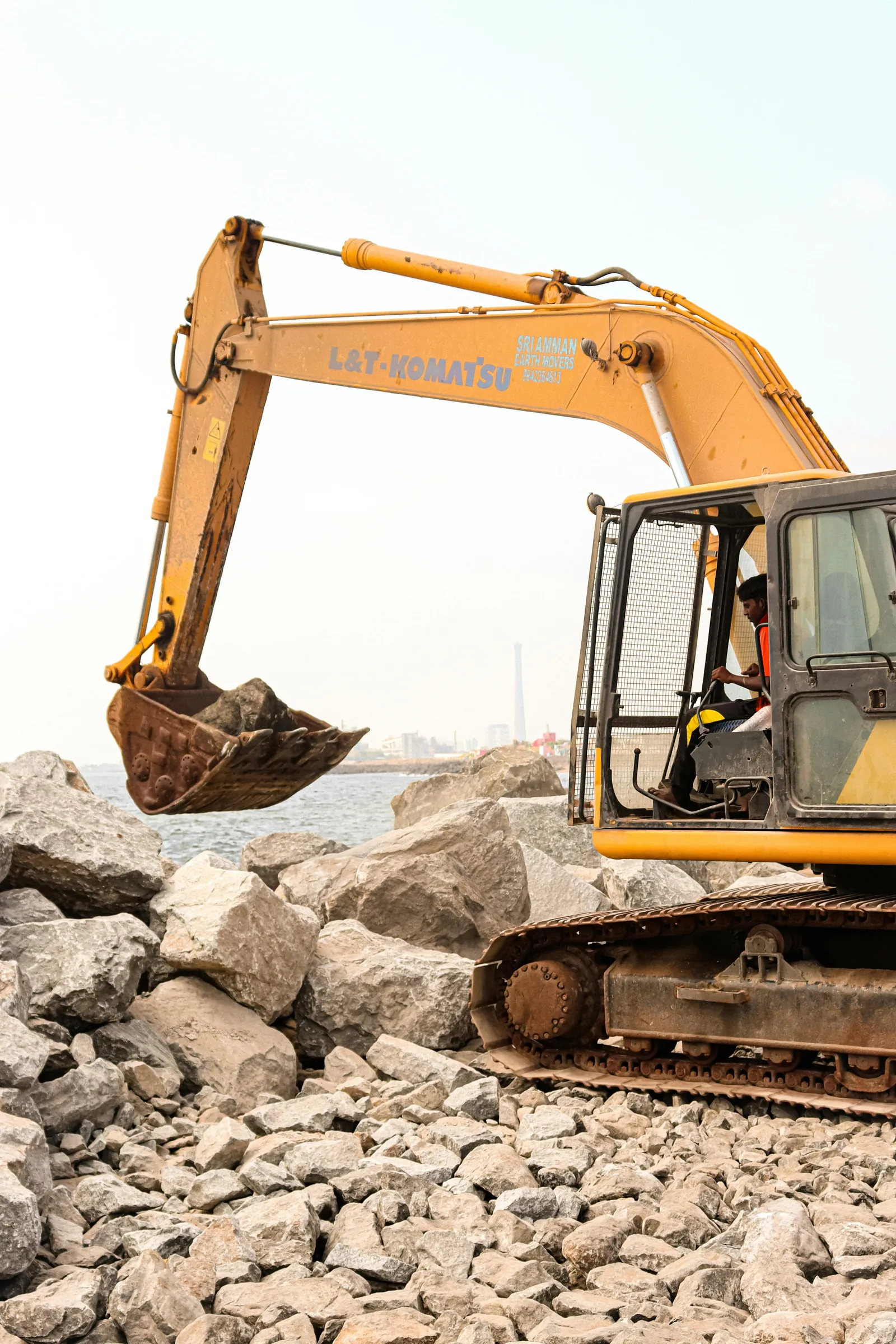
A deeper editorial overview of Sunward heavy equipment, with a focus on Sunward excavators, telehandlers, drilling equipment, parts support, and how Sunward construction machinery is being positioned for North American buyers.
Sunward is competing on range, not on a single flagship machine
Public materials from Sunward America present the company as a broad heavy-equipment supplier rather than a one-product brand. The official U.S. site highlights excavators, skid steers, telehandlers, and drills, while also stating that its excavator range stretches from roughly 4,145 pounds to 78,400 pounds. That kind of breadth matters because contractors and fleet managers rarely make procurement decisions around a single machine in isolation. They want to know whether a manufacturer can serve multiple use cases over time, from compact urban work to larger site-preparation and utility applications.
From an editorial perspective, this is where Sunward heavy equipment becomes more interesting than a simple brand profile. When a manufacturer emphasizes a wide equipment lineup, it is making a strategic statement about relevance. It is telling buyers that the conversation should not stop at one compact excavator or one entry-level machine. Instead, the company wants to be considered across categories and across stages of a fleet-replacement cycle.
Sunward excavators remain the anchor of the North American pitch
The clearest pattern in the brand’s U.S. messaging is the prominence of Sunward excavators. Excavators are among the most visible and versatile machines on many construction and utility sites, so they often shape first impressions of a manufacturer. For Sunward, that makes the excavator line a logical anchor for broader brand recognition. A contractor who becomes comfortable with a compact or mid-sized Sunward excavator may later be more willing to evaluate the company’s telehandlers, drills, or loader offerings as part of the same procurement conversation.
That does not mean the decision process becomes simple. Excavator selection still depends on lift capacity, hydraulic performance, operator familiarity, service intervals, attachment compatibility, and the kind of work the machine will perform every day. But as a category, excavators tend to carry more symbolic weight than many other job-site assets. They are often the machine that determines whether a contractor sees a newer brand as viable or merely experimental.
Telehandlers and drills broaden the commercial case
Sunward’s North American site gives telehandlers and drilling equipment enough visibility to suggest they are not secondary accessories to the brand story. Product pages describe models such as the SWTH634 telehandler around mobility, lift capacity, and maneuverability on tighter sites. On the drilling and rock-drill side, the company’s public materials frame the lineup around specialized use cases where buyers are looking closely at uptime, terrain suitability, and operator productivity.
That matters because Sunward construction machinery is being introduced into a market where versatility counts. Construction fleets are under pressure to justify capital spending carefully, and equipment brands that can serve multiple categories may have an easier time entering the conversation. A contractor may begin by comparing excavators, but procurement teams also look at whether a supplier relationship could extend into adjacent categories without creating support headaches later.
Parts, maintenance kits, and service logistics are part of the real product
One of the more practical details on the Sunward America site is the emphasis on parts and service. The company promotes genuine maintenance kits and describes them as a way to simplify scheduled service intervals, save time, and make routine maintenance more efficient. It also points prospective buyers toward dealer discovery and sales contacts when a local dealer is not immediately visible.
This is important because heavy equipment is never sold on specifications alone. For many buyers, the real product includes the support model: how fast parts can be sourced, whether service procedures are straightforward, and how disruptive scheduled maintenance will be to a working fleet. A machine that looks attractive on paper can still become a difficult ownership decision if parts availability or training support is uncertain. Sunward’s public support messaging suggests the company understands that concern and wants service logistics to be part of the trust-building process.
The Texas footprint helps localize the story
According to the company’s official background page, Sunward was established in 1999, entered the U.S. market in 2015, and moved its American headquarters to Denton, Texas, in 2019. The same page notes that the Texas operation is staffed for parts, service, sales, and machine training. That is a useful detail for U.S. readers because it shifts the story from abstract global manufacturing scale to practical local support capacity.
For North American contractors, localization often matters as much as engineering pedigree. Buyers want to know whether service and training are close enough to reduce operational friction, especially when evaluating a brand that may not yet have the same field familiarity as the most entrenched incumbents. A visible parts-and-training presence in Texas gives Sunward a clearer answer to that question than a purely import-driven narrative would.
A value-oriented brand still has to prove itself in the field
Sunward’s public messaging is clearly value-oriented, but value in this market is never just about sticker price. It is about the total ownership proposition: acquisition cost, support confidence, machine durability, operator acceptance, and whether the equipment actually fits the work mix of the fleet. That is why the most credible way to read the company’s North American profile is not as a promise of universal fit, but as an argument for inclusion in the shortlist.
For a neutral finance and industry audience, the takeaway is measured. Sunward heavy equipment is being positioned in the United States through breadth, dealer pathways, service support, and a practical lineup centered on Sunward excavators. That does not remove the need for side-by-side evaluation, but it does explain why Sunward construction machinery is gaining more visibility in fleet-planning and procurement discussions. The brand is not trying to win attention through hype. It is trying to make the case that it can be a credible, multi-category option for buyers who care about both machine capability and support infrastructure.
Source note: This article draws on publicly available information from official Sunward America product, telehandler, parts-and-service, and company-background pages.